Regional HR-mechanisms
The United Nations Charter provides scope for the development of regional human rights systems, which over time have emerged as regional complements to the global UN system. They are referred to as “systems” because they consist of a range of mechanisms and instruments, such as courts, commissions, special rapporteurs and legal instruments. Together, these form a system for the protection of human rights.
The regional human rights systems were designed to bring rights and accountability closer to the countries where they are most relevant and to contribute to peace and security. They offer many advantages – for example, it may be easier for countries with similar political and cultural developments to agree on common standards. It is also often easier and more relevant to monitor, review and implement necessary changes in the field of rights among geographically closer countries than within the sometimes more abstract UN system. Globally, the importance of joint solutions to cross-border challenges such as environmental harm, trafficking and drugs is increasing. Regional human rights systems are key actors in protecting, promoting and developing human rights close to where violations occur.
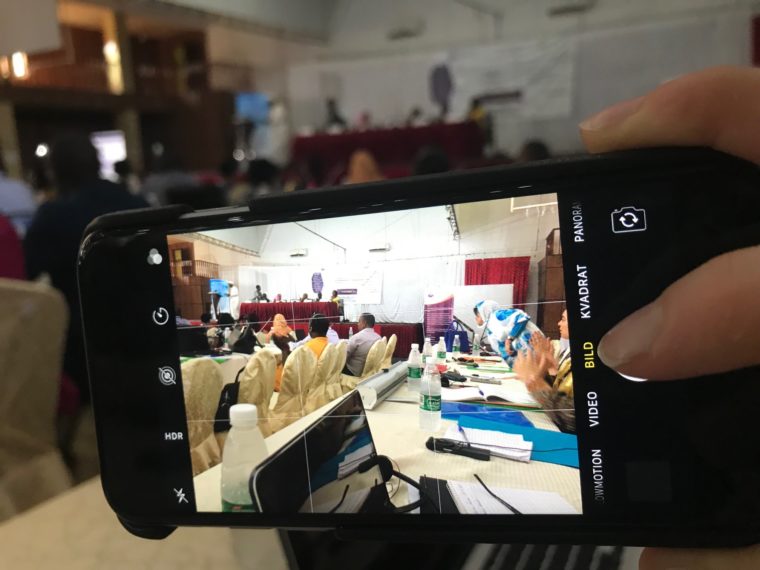
Picture from the 65th NGO Forum of the African Commission on Human and Peoples’ Rights, autumn session 2019.
Why does The Swedish Foundation for Human Rights work with regional human rights systems?
For many years, The Swedish Foundation for Human Rights has supported partner organisations within three regional human rights systems – in Europe, the Americas and Africa. The work has particularly focused on the latter two systems. One reason for this is that human rights organisations in these regions have often chosen the regional systems as arenas for seeking redress when national authorities have failed. In countries where the rule of law is weak and human rights violations are ignored, thousands of individuals have obtained redress through these human rights commissions and courts. Many, both within and outside the systems, testify to their significant impact.
In spring 2020, The Swedish Foundation for Human Rights initiated a project focusing on the MENA region and the Arab human rights system. The purpose of the project is to provide MR-Fonden with an overview of human rights structures and systems in Arab countries in order to gain a deeper understanding of how human rights are interpreted in the Arab context. Please see the separate section for more information.
Human rights systems depend on civil society organisations that make use of them and drive their development forward. Many actors in Sweden work to raise awareness of the importance of the UN system as a guarantor of human rights, but few systematically highlight the regional human rights systems. The ability of local human rights organisations to use these systems is hindered if their partners do not understand or wish to support this work. Similarly, organisations’ efforts – and thus individuals’ opportunities to obtain redress – are undermined if decision-makers responsible for policy and funding within development cooperation lack knowledge of the importance of these systems. The Foundation therefore seeks to contribute to increased awareness and knowledge in Sweden about the importance of regional human rights systems. The aim is to strengthen understanding of the role of development cooperation in global development through these regional systems.
What does the Swedish Foundation for Human Rights do in the field of regional human rights systems?
- We support partner organisations that use regional human rights systems to ensure that those subjected to human rights violations obtain redress – for example, through our cooperation with CAJAR in Colombia.
- We provide education in Sweden on regional human rights systems, for example at Stockholm University and on assignment for civil society organisations.
- We highlight the importance of regional human rights systems in our advocacy and information efforts, seeking to ensure that Swedish development cooperation strategies take them into account and support them. For example, Sweden’s Ambassador for Human Rights, Democracy and the Rule of Law, Annika Ben David, wrote the introduction to our 2018 publication on the regional human rights systems in Africa and the Americas.
Read our publications and policy briefs on regional human rights systems here.