Transitional Justice
What is transitional justice?
Transitional justice constitutes part of the Swedish Foundation for Human Rights’ work on redress for human rights violations. Transitional justice is an umbrella term for the processes and mechanisms used by a state to address massive violations of human rights and international humanitarian law committed in the context of an internal armed conflict, a dictatorship, or similar circumstances. Typically, such events have given rise to a situation that the ordinary justice system is unable to handle. There may also be an agreement between the parties to the transition to establish mechanisms outside the ordinary justice system. Transitional justice may, for example, form part of a peace agreement or be decided upon by a new democratic government.
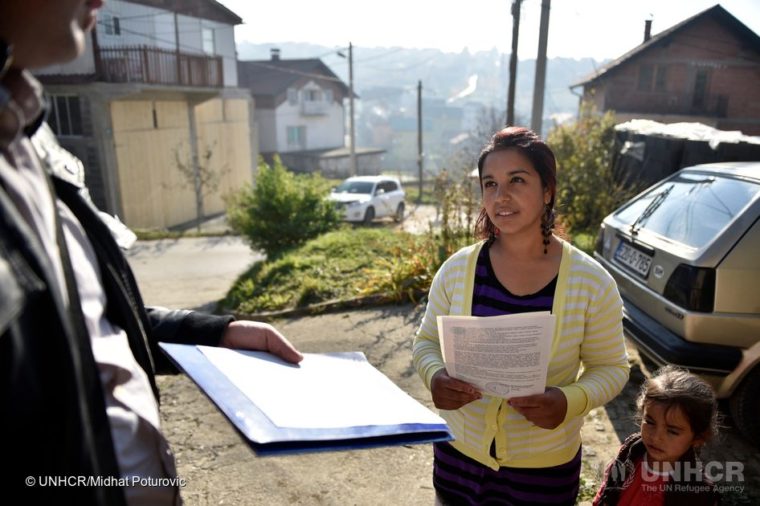
A primary objective of transitional justice is to fulfil victims’ rights to truth, justice and reparation. A second objective is to achieve reconciliation and sustainable peace, so that history does not repeat itself. The mechanisms used may be both judicial and non-judicial and can take many different forms and combinations—including hybrid models that combine judicial and non-judicial elements. No two processes are exactly alike—and for good reason—since each context is unique. What many processes have in common, however, is that they include different combinations of criminal proceedings, reparations, truth commissions, institutional reform, and the removal of those responsible for human rights violations from official positions.
Transitional justice has its origins in the processes that followed the transitions from military dictatorships in Argentina and Chile, but has since been applied in various forms in transition processes around the world. The original focus on transitions from dictatorship to democracy has thus been complemented by transitions from war to peace. Elements of transitional justice—most notably truth commissions and various forms of reparations—are also used as tools in other processes. Truth commissions have, for example, been used in Canada to investigate the Canadian state’s residential school system for Indigenous peoples, and in Sweden to examine the role of the Church of Sweden in the historical oppression of the Sami people. The latter is one of many examples of truth commissions driven by civil society. Such initiatives often emerge when the state is not willing to establish a truth commission and can serve as a means of pressure to prompt the creation of a state-led commission.
Within both the UN human rights system and the Inter-American human rights system there are Special Rapporteurs on transitional justice.
Why does the Swedish Foundation for Human Rights work with transitional justice?
There is added value in civil society actors being engaged in transitional justice processes, as they can promote, scrutinise, anchor and otherwise contribute to such processes. Transitional justice also overlaps with the broader field of redress for human rights violations on which the Swedish Foundation for Human Rights focuses. We have worked with transitional justice since 2006 and, over this period, have established ourselves as the leading civil society actor in Sweden in this field. Transitional justice is linked both to human rights and to peace- and democracy-building, and we see it as our role to integrate these perspectives and to bridge the traditional perception of tensions between peace and justice—both in theory and in practice.
What does the Swedish Foundation for Human Rights do in the field of transitional justice?
Colombia: The Swedish Foundation for Human Rights works with partners in Colombia who safeguard the interests of the civilian population in the ongoing transition and justice processes.
Colombia/Sweden: The Swedish Foundation for Human Rights is one of two accompanying organizations that have contributed to the collection of testimonies in Sweden for the Colombian Truth Commission.
Sweden: The Swedish Foundation for Human Rights has for a long time worked to highlight structures in Sweden that can be linked to the theme of transitional justice. For example, we have examined the situation of Swedish Sami and Roma from a transitional justice perspective. We continue to monitor developments in Sweden in this area, including by reviewing the truth and reconciliation commissions established for the Sami, as well as for Tornedalians, Kvens and Lantalaiset.
Burma: In Burma, we work with partners who collect evidence of human rights violations and prepare for a future transitional justice process.
Regional focus: Africa, America and Europe: We work to contribute to a better understanding of the link between regional human rights systems and sustainable peace.
Network: The Swedish Foundation for Human Rights is a co-founder of the Swedish Network for Transitional Justice and coordinates the network, which is a coalition of organisations and academics working in the field.
Information and Advocacy: We disseminate knowledge and foster debate on transitional justice, redress for human rights violations, and sustainable peace by organising seminars and producing reports.