Uganda
The Swedish Foundation for Human Rights collaborates with the women’s rights organisation Action for Development (AFCODE), they are a non-profit organisation founded in 1985 with extensive experience in promoting gender equality, strengthening women’s rights, and increasing women’s participation in decision-making processes in Uganda. In 2023, we jointly launched a new project funded by the Swedish Institute, focusing on increasing understanding of gender equality and enhancing the political participation of women and young women in southwestern Uganda. In the region, large parts of the population live in rural areas with limited infrastructure and socio-economic challenges such as unemployment, lack of access to education, and gender-based discrimination. Women and girls often have limited access to information and public forums.
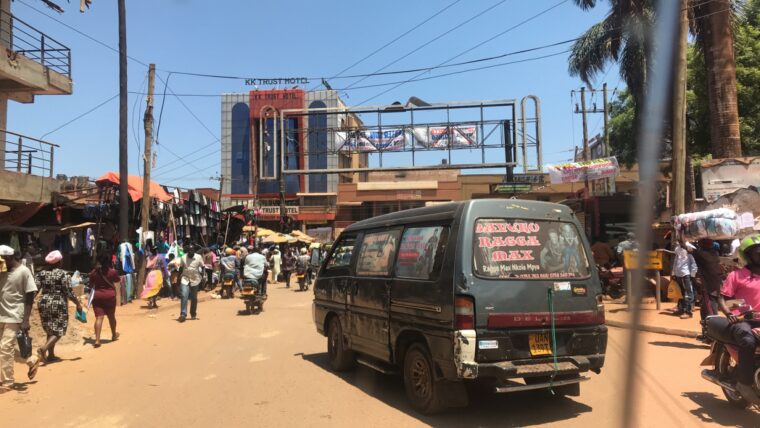
Picture from Masaka, Southern Uganda.
Why is the project relevant?
The underrepresentation of women in political leadership is a major problem in Uganda and stems from institutional, structural and cultural barriers, as well as societal attitudes that hinder women’s participation in public life. The problem is exacerbated by a lack of political education, as many Ugandans remain uninformed about how they can engage in decision-making processes.
The project aims to increase women’s and young women’s knowledge of their political rights and to strengthen their empowerment in democratic processes. Through dialogue meetings, workshops and local networks, space is created for women’s voices in public debate, which is a core objective of ACFODE.
Over the years, civil society organisations, including ACFODE, have taken initiatives to raise public awareness of democracy, women’s rights and human rights, as well as civic and political participation. Despite the progress made to date, awareness remains limited for most women and young women in rural areas due to deeply rooted social norms, perceptions and barriers that restrict access to civic information. Moreover, platforms that enable Ugandans to meaningfully engage in discussions on governance, democracy and their rights to participate in the country’s development processes are few and often inaccessible, particularly at lower local government levels.
Participants in the project testify to an increased understanding of democracy, political processes and participation. They observe greater gender equality both in their communities and in their private lives. The project has led to increased participation by women in the household economy and in decisions that affect them. Several men stated that they have changed their understanding of women’s participation in society and of the importance of girls attending school.
Previous projects
The Swedish Foundation for Human Rights has previously carried out a project together with ACFODE focusing on economic, social and cultural rights. At the time, the project addressed the situation of local communities in the area surrounding Mount Elgon National Park. When the area was designated a national park and thus a protected area in 1993, management was taken over by the Ugandan state, more specifically the Uganda Wildlife Authority (UWA). Local communities were forcibly displaced from land they had long inhabited and cared for. Since then, repeated threats, harassment, sexual violence and extrajudicial killings carried out by various actors have been common.
The project contributed to strengthening rights-holders, informing duty-bearers, drawing attention to the situation through various methods, and promoting the protection and respect of human rights in the area. The project resulted in significant positive changes. Local communities reported fewer instances of human rights violations, while at the same time increasingly demanding that their human rights be fulfilled. This led to greater awareness of human rights and of the roles and responsibilities of rights-holders and duty-bearers.
ACFODE works from a rights-based approach, focusing on strengthening women’s ability and power to claim their rights by providing them with the knowledge and tools necessary to actively participate in societal development. Through education and mobilisation, women are equipped with the knowledge and tools needed to challenge unjust power structures, participate in the public sphere, and demand influence over their future.
Watch the video and get more information about the project: